Increase 512MB Upload Limit for All-in-One WP Migration Plugin

IMPORTANT UPDATE (08/29/2018)
For the instructions outlined in this tutorial to work, you must use version 6.77 or earlier of the All-in-one WP Migration Plugin.
You need to use the old version of All-in-One WP Migration Plugin 6.77 here.

There are 7 steps in this tutorial:

  • 1. Activate Plugin
  • 2. Open Plugin Editor
  • 3. Select Plugin
  • 4. Open Constants.php File
  • 5. Edit Constants.php File
  • 6. Save Changes
  • 7. Test Settings

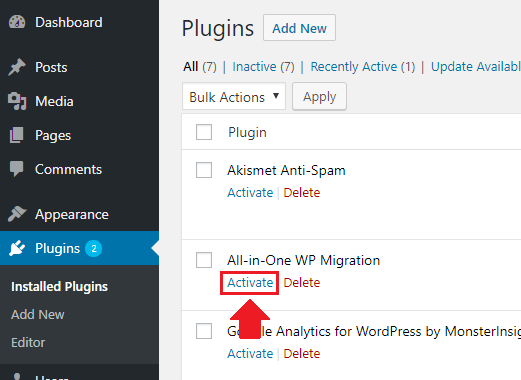
1. Activate Plugin

all-in-one wp migration unlimited extension free
Make sure that your All-in-One WP Migration plugin is activated.

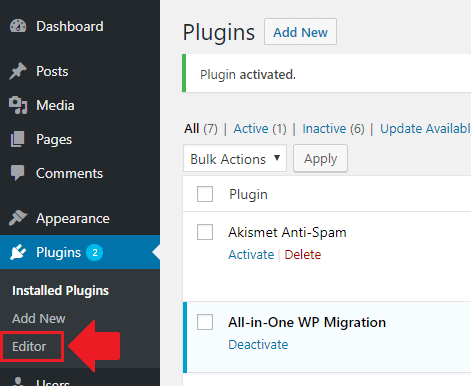
2. Open Plugin Editor
all-in-one wp migration unlimited extension free
From your WordPress sidebar menu, click on Editor under the Plugins column.

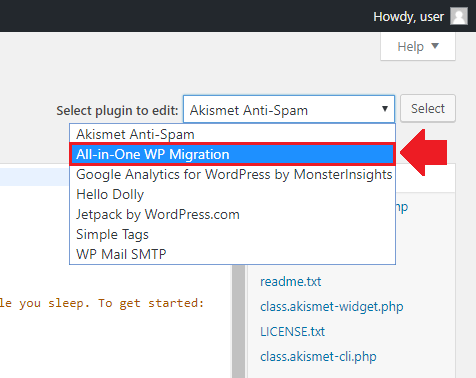
3. Select Plugin
all-in-one wp migration unlimited extension free
In the upper right-hand corner of the Editor page, select the All-in-One WP Migration plugin.

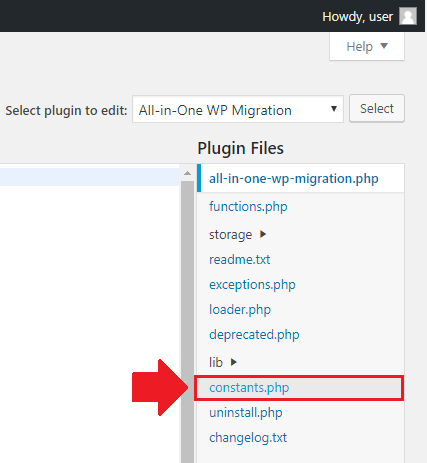
4. Open constants.php File
all-in-one wp migration unlimited extension free
After selecting the All-in-One WP Migration plugin, select constants.php from the list of plugin files.

5. Edit constants.php File
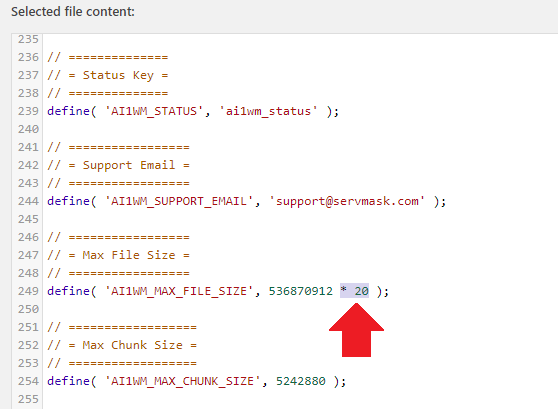
all-in-one wp migration unlimited extension free
Scroll down to line 249 of the constants.php file to the Max File Size section, and add * 20next to the existing number as shown below:
// ================= 
// = Max File Size = 
// ================= 
define( 'AI1WM_MAX_FILE_SIZE', 536870912 * 20 );

6. Save Changes
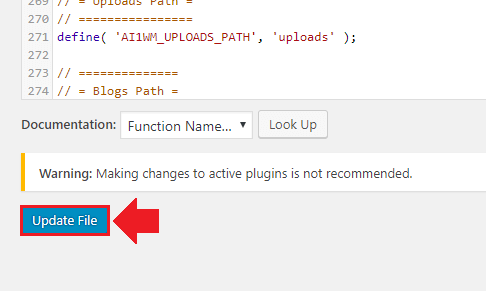
all-in-one wp migration unlimited extension free
Scroll to the bottom of the page and click on Update File in order to save changes.

7. Test Settings
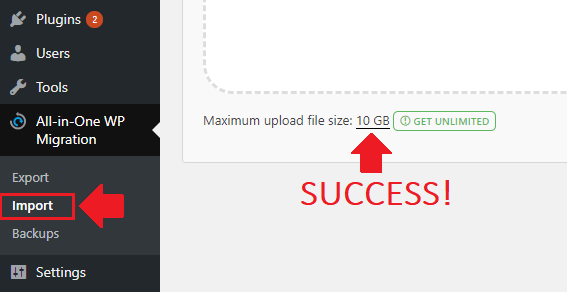
all-in-one wp migration unlimited extension free
If your changes were successful, you will notice that the maximum upload filesize has been increased to 10GB.

IMPORTANT

Additional Information

If you ever need to increase the upload limit to more than 10GB, simply increase the multiplier. By using a multiplier of 60 instead of 20 (as shown below) you would increase your upload limit to 30GB.
// ================= 
// = Max File Size = 
// ================= 
define( 'AI1WM_MAX_FILE_SIZE', 536870912 * 60 );
Be aware that the upload limit will revert back to 512MB whenever the plugin is updated, so you will need to repeat this tutorial if you ever update the plugin.

Advanced Users

If you prefer to edit the file from outside of WordPress, you can find the plugin’s contants.php file by using the following file path:
/wp-content/plugins/all-in-one-wp-migration/constants.php
For Google Cloud, AWS, and Azure users – use the file paths below to locate your constants.php file.
If you’re using WordPress Bitnami, your constants.php file will be located at:
/opt/bitnami/apps/wordpress/htdocs/wp-content/plugins/all-in-one-wp-migration/constants.php
If you’re using WordPress Click-to-Deploy, your constants.php file is located at:
/var/www/html/wp-content/plugins/all-in-one-wp-migration/constants.php

That’s it!

Credit : www.onepagezen.com

Noted: This is only for personal documentation purposes only.

Comments

Popular posts from this blog

How to add your Source Code to GitHub

Quick setup  — if you’ve done this kind of thing before  Set up in Desktop or HTTPS SSH Get started by  creating a new file  or  uploading an existing file . We recommend every repository include a  README ,  LICENSE , and  .gitignore . …or create a new repository on the command line echo "# bms" >> README.md git init git add README.md git commit -m "first commit" git branch -M main git remote add origin https://github.com/xxxxxxxxx/bms.git git push -u origin main …or push an existing repository from the command line git remote add origin https://github.com/xxxxxxxxxx/bms.git git branch -M main git push -u origin main -------------------------------------------------------------------------------------------------------- Proper steps to add existing code to GitHub The proper way to push a new project into an existing GitHub repository follows these steps: Create a GitHub repository for the existing project. Copy the GitHub URL for th...

Add Printer: Windows cannot connect to the printer. FIXED!

  Fix Windows Cannot Connect to the Printer Issue. Easily! 1. Search "Registry Editor" 2. Locate Computer\HKEY_LOCAL_MACHINE\SYSTEM\CurrentControlSet\Control\Print and right-click select  New > Key  >  "DWORD (32-bit) Value" 3. Rename the file to  RpcAuthnLevelPrivacyEnabled 4. Right Click select " Modify..." 5. Make sure the Value name is correct " RpcAuthnLevelPrivacyEnabled" Value Data is 0  and the Base is Hexadecimal and click  OK . And now follow the steps below to stop the Print Spooler service  and then start it again. 1. Press Win+R (Windows logo key and R key) at the same time. A Run dialog box will open. Type services.msc in the run box and click OK button. 2. In the Name list, locate and double-click on services  Print Spooler . 3. Click Restart. Congratulations! 

How to connect your Website domain name to a Cloud VPS hosting environment running XAMPP

To connect your Website domain name to a Cloud VPS hosting environment running XAMPP, follow these steps: Obtain Your VPS IP Address : Log in to your Contabo account and navigate to your VPS management section to find your server's public IP address. Configure Your Domain's DNS Settings : Access your domain registrar's control panel. Locate the DNS management section. Create an 'A' record pointing your domain (e.g., yourdomain.com ) to your VPS's public IP address. If you want ' www.yourdomain.com ' to also point to your VPS, add a 'CNAME' record for 'www' pointing to 'yourdomain.com'. Set Up Virtual Hosts in XAMPP : On your VPS, open the httpd-vhosts.conf file located at C:\xampp\apache\conf\extra\httpd-vhosts.conf . Add the following configuration, replacing placeholders with your actual domain and directory paths: <VirtualHost *:80> ServerAdmin [email protected] DocumentRoot "C:/xampp/ht...