GoodSync Best and Simple Sync Application Tutorial


GoodSync automatically synchronizes and backs up all your photos, music, email, and other important files between all your desktops, laptops, servers, and external drives.


Download Link: https://www.goodsync.com/download

How to Create a New Job

  1. On the Job menu select New, or click the New Job Button in the toolbar
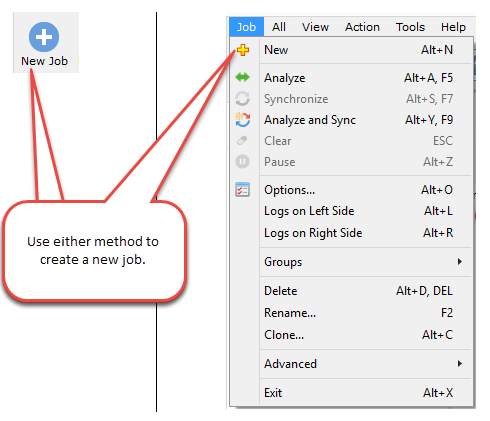
    Create a New Job
  2. On the New GoodSync Job prompt:

    1. Enter the Name for your new Job.

    2. Select Backup or Synchyronize as your Job Type.
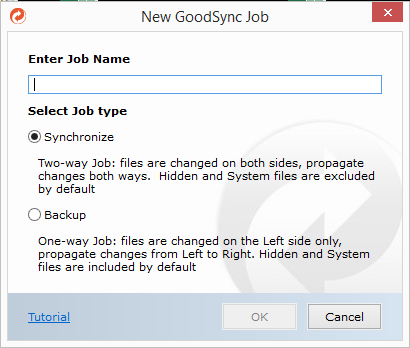
    New Job Name
  3. Click the Left Browse button. Choose the Left Folder for your new Job.

    Select Left Folder
  4. Click the Right Browse button. Choose the Right Folder for your new Job.

    Select Right Folder
  5. Click the Analyze button and review the proposed changes.
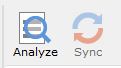
    Analyze Your Files
  6. Click the Sync button.

    Sync the Changes

Your Files Are Now Synchronized! — Yes, it's that Easy!


How to Enable Automatic Settings - Set it and Forget it!

There are a variety of automatic settings you can choose. You only need to set up your synchronization job once and GoodSync will automatically synchronize your files according to your preferred schedule/settings.

  1. Select Options from the Job menu.

    Job Options
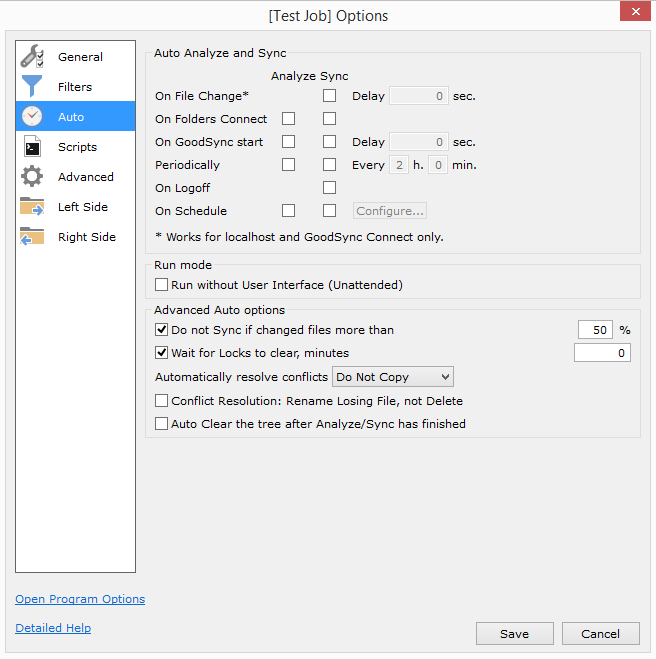
  2. Select the Auto section.

    Automatic Job Settings
  3. Set the specific Automated settings as desired.

GoodSync will now automatically synchronize your files based on your settings.

Comments

Popular posts from this blog

How to add your Source Code to GitHub

Quick setup  — if you’ve done this kind of thing before  Set up in Desktop or HTTPS SSH Get started by  creating a new file  or  uploading an existing file . We recommend every repository include a  README ,  LICENSE , and  .gitignore . …or create a new repository on the command line echo "# bms" >> README.md git init git add README.md git commit -m "first commit" git branch -M main git remote add origin https://github.com/xxxxxxxxx/bms.git git push -u origin main …or push an existing repository from the command line git remote add origin https://github.com/xxxxxxxxxx/bms.git git branch -M main git push -u origin main -------------------------------------------------------------------------------------------------------- Proper steps to add existing code to GitHub The proper way to push a new project into an existing GitHub repository follows these steps: Create a GitHub repository for the existing project. Copy the GitHub URL for th...

Add Printer: Windows cannot connect to the printer. FIXED!

  Fix Windows Cannot Connect to the Printer Issue. Easily! 1. Search "Registry Editor" 2. Locate Computer\HKEY_LOCAL_MACHINE\SYSTEM\CurrentControlSet\Control\Print and right-click select  New > Key  >  "DWORD (32-bit) Value" 3. Rename the file to  RpcAuthnLevelPrivacyEnabled 4. Right Click select " Modify..." 5. Make sure the Value name is correct " RpcAuthnLevelPrivacyEnabled" Value Data is 0  and the Base is Hexadecimal and click  OK . And now follow the steps below to stop the Print Spooler service  and then start it again. 1. Press Win+R (Windows logo key and R key) at the same time. A Run dialog box will open. Type services.msc in the run box and click OK button. 2. In the Name list, locate and double-click on services  Print Spooler . 3. Click Restart. Congratulations! 

How to connect your Website domain name to a Cloud VPS hosting environment running XAMPP

To connect your Website domain name to a Cloud VPS hosting environment running XAMPP, follow these steps: Obtain Your VPS IP Address : Log in to your Contabo account and navigate to your VPS management section to find your server's public IP address. Configure Your Domain's DNS Settings : Access your domain registrar's control panel. Locate the DNS management section. Create an 'A' record pointing your domain (e.g., yourdomain.com ) to your VPS's public IP address. If you want ' www.yourdomain.com ' to also point to your VPS, add a 'CNAME' record for 'www' pointing to 'yourdomain.com'. Set Up Virtual Hosts in XAMPP : On your VPS, open the httpd-vhosts.conf file located at C:\xampp\apache\conf\extra\httpd-vhosts.conf . Add the following configuration, replacing placeholders with your actual domain and directory paths: <VirtualHost *:80> ServerAdmin [email protected] DocumentRoot "C:/xampp/ht...